Quick summary: make cleaning part of the routine
Brushes collect makeup residue, skin oils and other debris. The American Academy of Dermatology advises washing makeup brushes every 7 to 10 days. Plan a regular cleaning slot so brushes can dry fully before you need them again. Cleaning supports hygiene and tool care; it is not a treatment for an existing skin infection.
“To protect your skin and kill any harmful bacteria that lingers in your makeup brushes, it’s a good idea to wash your brushes every 7 to 10 days.”
The AAD recommends regular washing as a hygiene habit, not as treatment for a skin condition.
Rinse the tips, not the whole brush
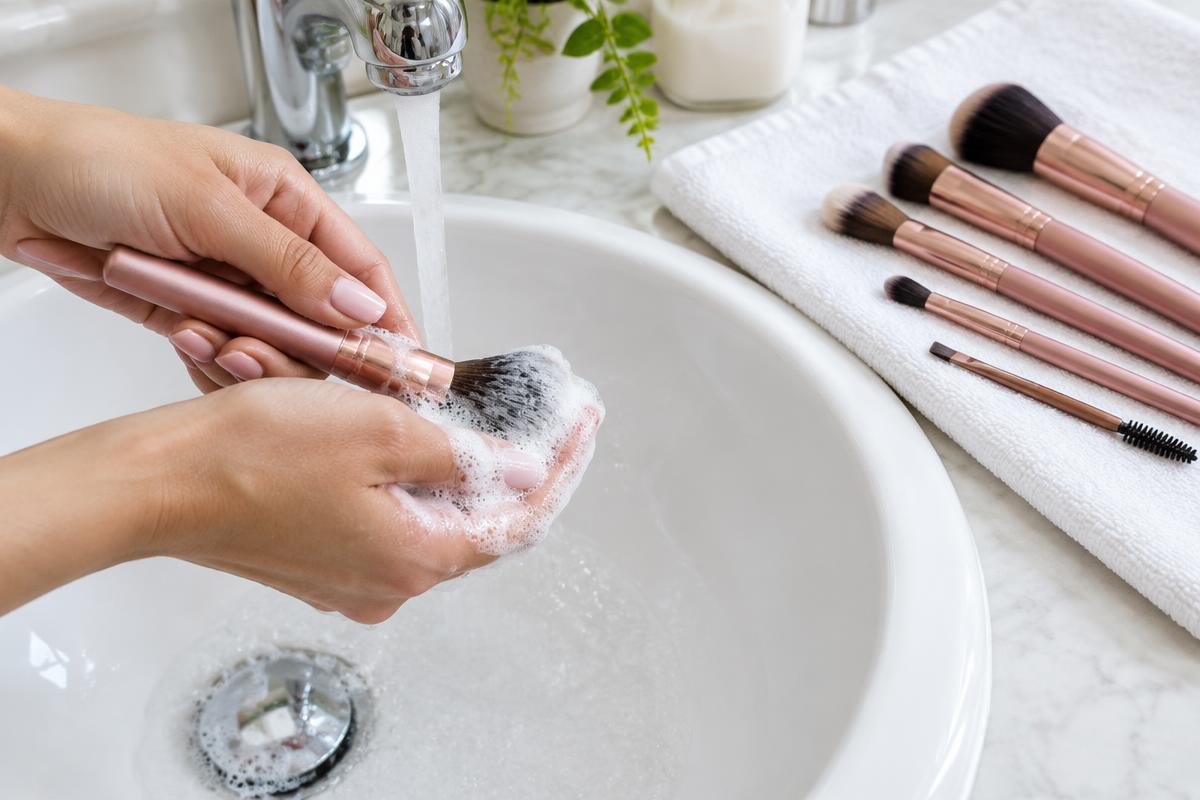
Use lukewarm running water to rinse residual makeup from the bristle tips. Avoid soaking the whole brush head or handle: water can weaken the glue that secures the bristles. Follow any specific instructions for delicate or specialty brushes, and keep powered tool parts away from water unless their directions explicitly permit washing.
“Only rinse the tip, as submerging the whole brush head will eventually dissolve the glue that connects the brush head to the handle.”
Keeping water away from the handle helps preserve the brush’s construction while cleaning the bristles.
Use a gentle cleanser and rinse thoroughly
The AAD suggests a bowl of lukewarm water with gentle or clarifying shampoo. Swirl the brush tips in the water and gently massage the bristles if needed. Rinse under running water and repeat until it runs clear. Avoid harsh scrubbing or assuming a scented cleaner is better; the goal is removing residue without damaging the brush.
Reshape and dry flat
Squeeze excess moisture out gently using a clean paper towel, then reshape the bristles. Lay brushes flat with their tips extending over the counter edge so air can circulate. Do not dry them upright while wet, which lets water run toward the handle. Wait until they are fully dry before using them or closing them inside a case.
The bottom line: clean tools, sensible habits
Keep brushes personal rather than sharing them, and store dry tools in a clean place. Replace brushes that shed heavily or are difficult to clean. If a tool appears linked to ongoing irritation, stop using it and seek professional advice. A consistent cleaning habit is more useful than accumulating more brushes you cannot maintain.
Sources
These quotations come from published expert guidance, not trials of particular products or medical review of this article.