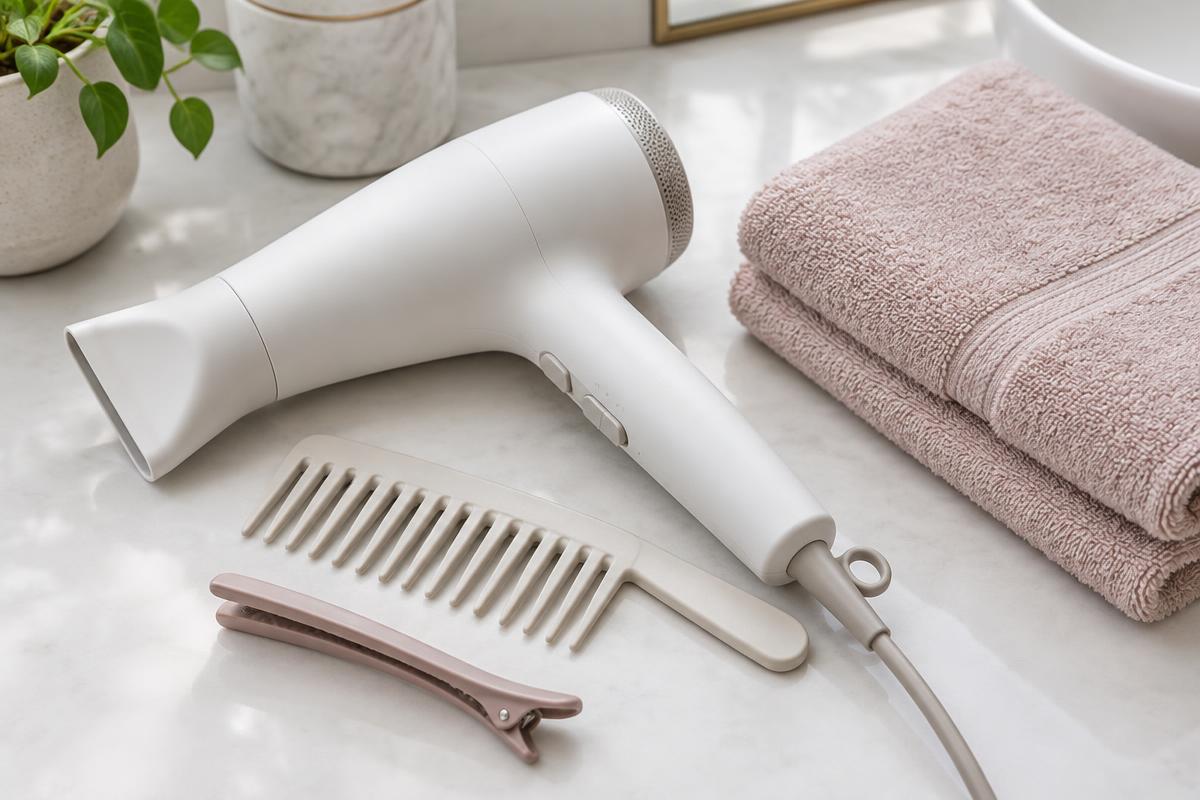
Quick summary: less heat, more intention
The most useful heat-styling upgrade is not automatically a new tool. Work with your hair’s condition, use a lower setting and avoid repeatedly passing over the same section. The American Academy of Dermatology recommends low or medium heat for flat irons and brief contact for curling irons. These habits aim to reduce damage rather than promise damage-free styling.
Prepare your hair before picking up a tool
Cleanse according to your scalp’s needs and condition your lengths. Detangle gently rather than pulling through knots, and let hair partially air-dry before blow-drying when practical. Flat irons belong on dry hair, not damp sections. If you use a heat-protection product, follow its directions; it does not make unlimited heat exposure harmless.
Choose the lowest useful setting
Start with low heat and only adjust if needed. Fine, bleached or already fragile hair deserves particular care. A temperature display can help you keep settings consistent, but a high maximum temperature is not a benefit in itself. Reduce repeated passes and leave space between heated styling sessions.
“Flat irons should be used on dry hair on a low or medium heat setting, no more often than every other day.”
This dermatology guidance supports lower-heat, less-frequent styling rather than claims that any device eliminates damage.
Keep contact brief and avoid pulling
Move a dryer rather than concentrating heat on one spot. With a curling iron, keep contact brief and follow the device’s safety instructions. Avoid combining high heat with tight tension, especially around fragile edges. Give yourself time to style without rushing or repeatedly reheating sections.
“If you use a curling iron, only leave it in place for a second or two.”
Brief tool contact is part of the AAD’s guidance for reducing heat damage. Follow the device’s safety instructions as well.
The bottom line: protect the hair you have
Conditioning, careful detangling and fewer high-heat sessions form a more considered routine than chasing a repair claim. If breakage persists, reduce heat further and reassess chemical treatments or tight styles. Sudden shedding, scalp pain or patchy loss needs a dermatologist’s assessment rather than another styling product.
Sources
These quotations come from published expert guidance, not trials of particular products or medical review of this article.